
Advisor interview: Prof. Paolo Parini, Director of Research & Development, Education and Innovation, Karolinska Institutet and Karolinska University Hospital
Nov 03, 2025 | Reading time: 5 minutes
We had the chance to sit down with Professor Paolo Parini, MD, PhD, from Karolinska Institutet and Karolinska University Hospital who has recently joined the MedInsights team as our Scientific Advisor.


1. Your distinguished career is rooted in studies of lipoprotein metabolism, particularly the molecular mechanisms of cardiometabolic diseases. What excites you most about the opportunity to directly integrate this deep clinical and molecular knowledge with MedInsights' AI-driven drug repositioning platform, Nexus-Rx?
Cardiometabolic diseases are multiorgan and multimodal in their nature, in which clinical comorbidities are often the result of a complex and heterogeneous biology. MedInsights’ NEXUS-Rx lets us encode that biology directly into an explainable AI framework, instead of treating it like noise. That means moving from correlations to mechanism-anchored predictions and patient stratifications that clinicians can trust. Recent work shows that multimodal AI can materially improve phenotyping and risk prediction in this space, which is exactly where I want my lab’s knowledge to go.
2. You have been a vocal proponent of how AI and Network Medicine can 'redefine medicine' and assist clinicians. In rare and metabo-inflammatory diseases, how does MedInsights' approach accelerate the path from lab data to a validated, effective therapeutic option?
Network Medicine treats disease as a disturbance of interconnected modules—not a single faulty molecule—and AI lets us read those modules at scale. When we fuse multi-omics, clinical phenotypes, and exposome data into mechanistic networks, we can pinpoint the endophenotypes that truly drive disease and design therapies against them, rather than just treating downstream symptoms. That shift is the engine of speed and precision. For rare and metabolic-inflammatory conditions, data is sparse and heterogeneous. MedInsights’ network- and knowledge-graph-centric approach aligns with what we’ve published: use heterogeneous networks to integrate diverse evidence (chemistry, targets, pathways, phenotypes), then apply graph learning to prioritize targets and repurposing candidates with explainable rationales. Heterogeneous networks outperform single-source models and weighting schemes and graph methods (e.g., deepDTnet, NeoDTI) improve drug-target predictions, exactly the kind of tool you need when cohorts are small. Graph representation learning enables disease-module discovery, cross-context transfer, and uncertainty-aware, iterative experiment design while keeping models interpretable and resistant to shortcut learning. That means we can move from a computational hit to biological plausibility to patient-level stratification with fewer dead ends. Finally, translation must be human-relevant from day one. In our work, we couple patient-derived multi-omics with organ-specific interactomes and then verify predicted effects in human cell systems - shrinking dimensionality and surfacing testable mechanisms before costly trials. A MedInsights pipeline that operationalizes this “module → mechanism → model → measured benefit” loop will de-risk decisions and accelerate a credible therapeutic to the clinic.
3. Moving research from academia into successful clinical application often presents significant challenges. What specific scientific or strategic blind spots are you hoping to help MedInsights avoid, ensuring the Nexus-Rx platform delivers robust, clinically relevant results for patients?
I will always strive after a trustworthy, explainable, healthcare professional and patient friendly platform, which will also inform on economically sustainable and relevant actions. This will ensure the successful implementation of the platform we are developing
4. MedInsights focuses on rare and metabolic-inflammatory diseases. Given your expertise in complex metabolic pathways, is there a particular area within these conditions where you believe the combination of your clinical experience and MedInsights’ AI holds the most transformative potential?
MedInsights unifies heterogeneous evidence into an explainable knowledge graph, using graph learning to discover disease modules, predict drug–target links, and prioritize bile-acid transporters/receptors and pathway crosstalk—then rapidly iterates from in-silico hits to patient-level stratification, even with small cohorts. With cross-context transfer and an experiment-guiding loop, it compresses the journey from mechanistic hypothesis to validated therapy and clearly defined responders, shifting care from symptom control to mechanism-based treatment.
5. What was the critical factor—whether it was the science, the team, or the mission—that convinced you this was the right time to formalize this strategic partnership with MedInsights?
All the three at the same time. Without science it would be unethical. Without a team it would be undoable. Without a mission it will have no sense.
Advisor interview: Dr. Kingsley Urakpo, Pharmaceutical Physician, Managing member, NADDBio LLC
Nov 17, 2025 | Reading time: 5 minutes
We had the chance to talk with Dr. Kingsley Urakpo, MD, MBBS, MSc, MBA, FFPM, a distinguished pharmaceutical physician and Managing member of NADDBio LLC who has recently joined the MedInsights team as our Advisor.
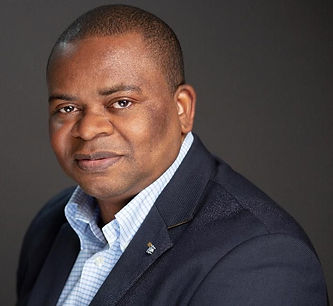

1. Dr. Urakpo, your background spans clinical practice, big pharma, biotech, and consulting across numerous therapeutic areas. How do you plan to leverage this unique 360-degree view of the biopharmaceutical landscape to shape MedInsights' strategic direction and deliver innovative solutions for our clients in the next 12-24 months?
I view the biopharmaceutical ecosystem as an integrated continuum, leveraging my 360-degree experience across clinical medicine, big pharma development, biotech, and strategic consulting to shape MedInsights' direction. Over the next 12-24 months, I will translate clinical grounding and emerging science into actionable, patient-centric, and investor-credible strategies, bridging the gap between innovation and adoption. By integrating cross-sector experience, I will guide clients in portfolio optimization and asset positioning, accelerating early-stage programs and shaping go/no-go decisions with real-world intelligence. My goal is to embed structured, data-driven frameworks to drive measurable ROI, ensuring MedInsights doesn't just advise clients but actively shapes their success by transforming complex variables into clear, executable strategies
2. You have core competencies in clinical development, pharmacovigilance, and regulatory affairs, with specialized experience in complex areas like oncology and rare diseases. Could you share an example of how you intend to integrate your deep knowledge in translational medicine and cross-functional leadership to enhance the efficiency and success rate of MedInsights' drug development programs?
To enhance development efficiency and success, I will integrate clinical development, pharmacovigilance, and regulatory strategy into a single continuum, ensuring early mechanistic insights and regulatory foresight shape every decision. I have prior experience leading cross-functional teams that used translational biomarkers and early safety signals as decision drivers, refining dose selection and inclusion criteria in real-time to reduce trial timelines and attrition risk. At MedInsights, I intend to embed translational intelligence early to design adaptive, biomarker-driven studies, align safety and regulatory strategy to de-risk programs proactively, and drive cross-functional synergy to accelerate Phase 1-2 transitions. My objective is to operationalize translational leadership, turning scientific depth and regulatory acumen into a measurable competitive advantage for clients
3. The global biopharma industry is currently facing significant challenges, from evolving regulatory frameworks to increasing pressure on drug pricing. Given your business acumen and commercial experience, what is the most critical industry trend MedInsights must capitalize on or address, and what is your immediate strategic recommendation for our organization?
The most critical trend is the convergence of scientific innovation with evidence-driven value demonstration. The winners will be those who translate scientific differentiation into economic and clinical value early, aligning R&D, market access, and real-world evidence before Phase 2. My immediate strategic recommendation is to position MedInsights as a "translational-to-commercial accelerator". This requires three imperatives: first, integrating value and access thinking upstream to help clients quantify and communicate differentiated value; second, operationalizing data-enabled decision-making by expanding analytics for predictive, scenario-based tools; and finally, differentiating through strategic foresight that combines regulatory, safety, and commercial pragmatism. We must help clients navigate uncertainty by turning translational science, regulatory insight, and commercial data into coherent, investor-ready development roadmaps.
4. As a Strategic Advisor, you will be key in shaping our client partnerships. When a potential client, whether it's a small biotech or a large pharmaceutical company engages with MedInsights, what is the single most valuable outcome or unique insight you believe your guidance will ensure they receive?
The single most valuable outcome I aim to deliver for every MedInsights client ,from emerging biotech to global pharma, is strategic clarity grounded in scientific and commercial realism. My guidance ensures clients move beyond isolated data points to a cohesive understanding of where science, regulation, and market value intersect, enabling them to make faster, better-informed development and investment decisions. Whether that means refining proof-of-concept strategy, de-risking regulatory pathways, or quantifying value early for investors and payers, I help translate complexity into actionable, board-ready strategy. Ultimately, my goal is to ensure that every MedInsights engagement yields not just insight, but momentum - the confidence and direction to advance innovation efficiently and sustainably.
5. You are joining MedInsights. What attracted you to this specific organization at this time, and what is your personal vision for fostering a culture of scientific excellence and entrepreneurial spirit within the team here?
What drew me to MedInsights is its rare balance of scientific depth and entrepreneurial agility — an environment where rigorous science meets the courage to challenge convention. At this stage in my career, I’m most energized by organizations that not only innovate therapeutically but also redefine how translational science and strategic execution converge to accelerate impact for patients. My vision is to foster a culture that combines scientific excellence with ownership mindset, empowering teams to think boldly, execute decisively, and learn continuously. By aligning curiosity with accountability, and creativity with data-driven discipline, we can cultivate a truly entrepreneurial organization, one that transforms great science into sustainable, life-changing innovation.